If review requests at your clinic depend on someone at the front desk remembering to ask, you are collecting a fraction of the reviews you have already earned.
Not because patients don't want to leave one. Most of them are happy to.
A patient walks out, goes back to work, picks up the kids, stops at the pharmacy. By the time they have a free minute, the review is gone from their mind.
That gap is the whole problem, and it is a workflow problem, not a service problem.
Automation closes it. After the visit, the patient gets a WhatsApp or SMS message with a direct link to your Google review page, without anyone on your team doing anything.
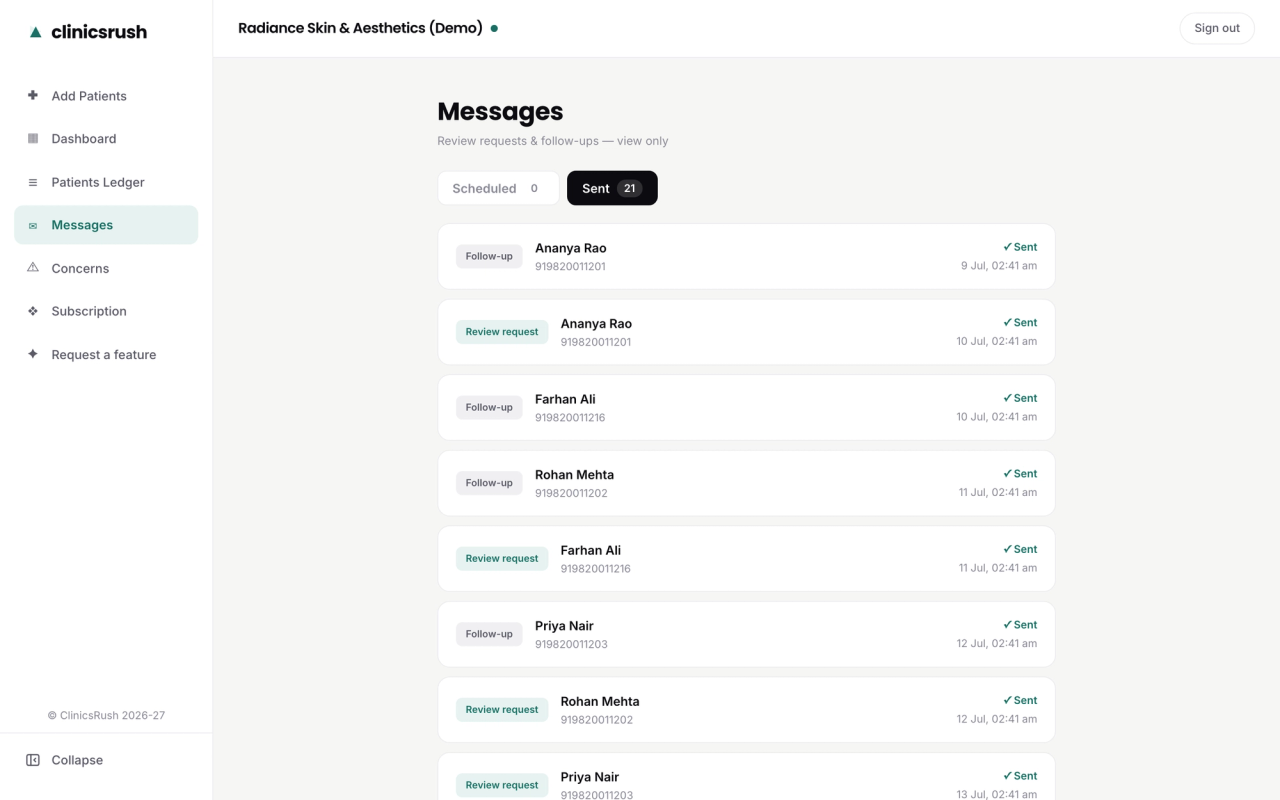
Here is how it actually works, and where clinics usually get it wrong.
Why Aren't Happy Patients Leaving Reviews?
A clinic can treat hundreds of patients a month, hear compliments every day, and still sit on a handful of Google reviews.
The gap isn't between good service and happy patients. It's between a happy patient and a review request.
In most clinics the ask isn't part of the workflow at all. It happens when someone remembers. On a busy day, with appointments, billing and the phone going, it doesn't get remembered.
Then there's timing. A patient who just finished their appointment is far more likely to leave a review than one who walked out three days ago.
And consistency. One staff member asks every patient. Another asks a few. A third skips it entirely. Those small gaps compound into a review count that has nothing to do with how satisfied your patients are.
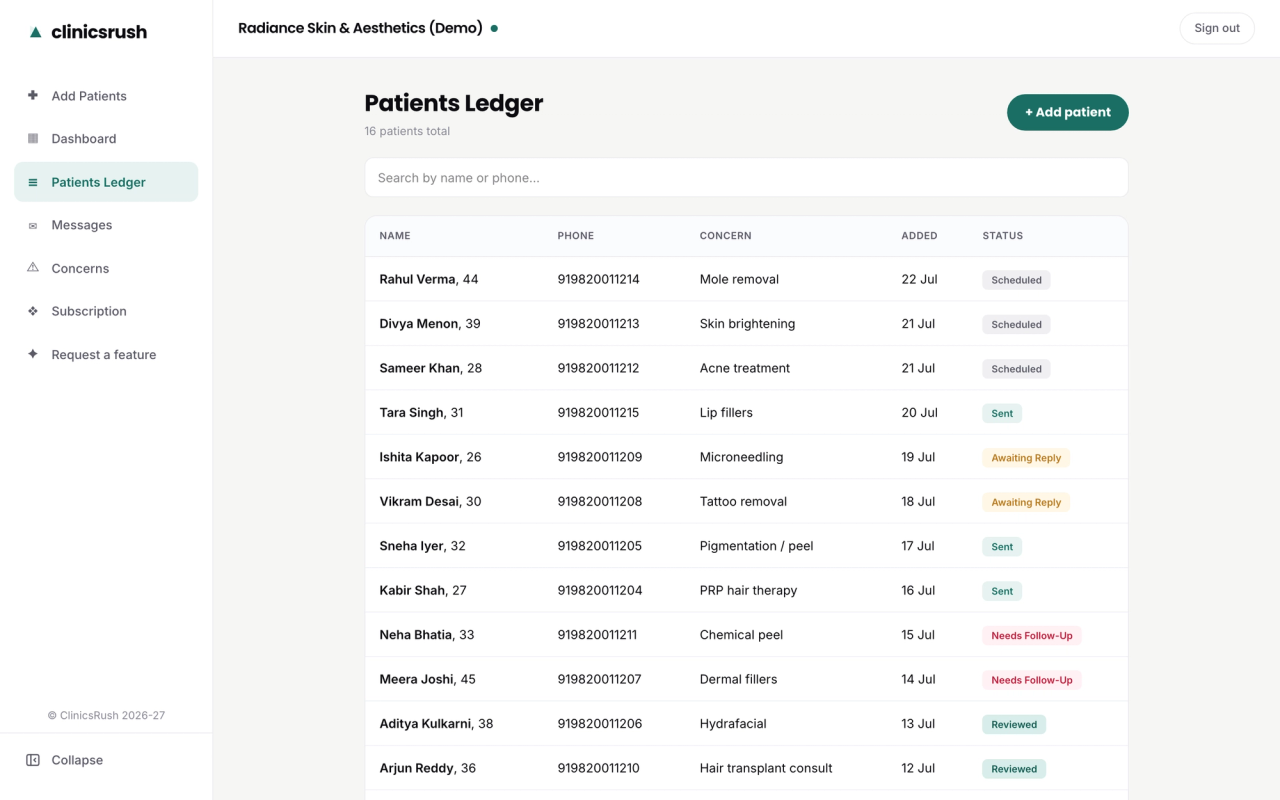
Clinics that grow reviews steadily don't leave the ask to memory. They make it happen the same way every time.
You can also read: How to Get More Patient Reviews for Your Clinic
Can Patient Reviews Really Be Automated?
Yes, and the mechanism is boring. Software sends the request after the visit. That's it.
The workflow looks like this:
- A patient completes their appointment.
- The patient is added to your follow-up workflow.
- A personalised WhatsApp or SMS message goes out automatically.
- The patient opens it and shares their feedback.
No manual reminders. No spreadsheets. No wondering whether anyone remembered to ask.
The advantage isn't clever wording in the message. It's that the ask happens every single time.
How Does ClinicsRush Automate Patient Reviews?
I'll use my own tool as the example, because it's the one I can describe honestly.
Someone on your team adds the patient after the visit. It takes about ten seconds.
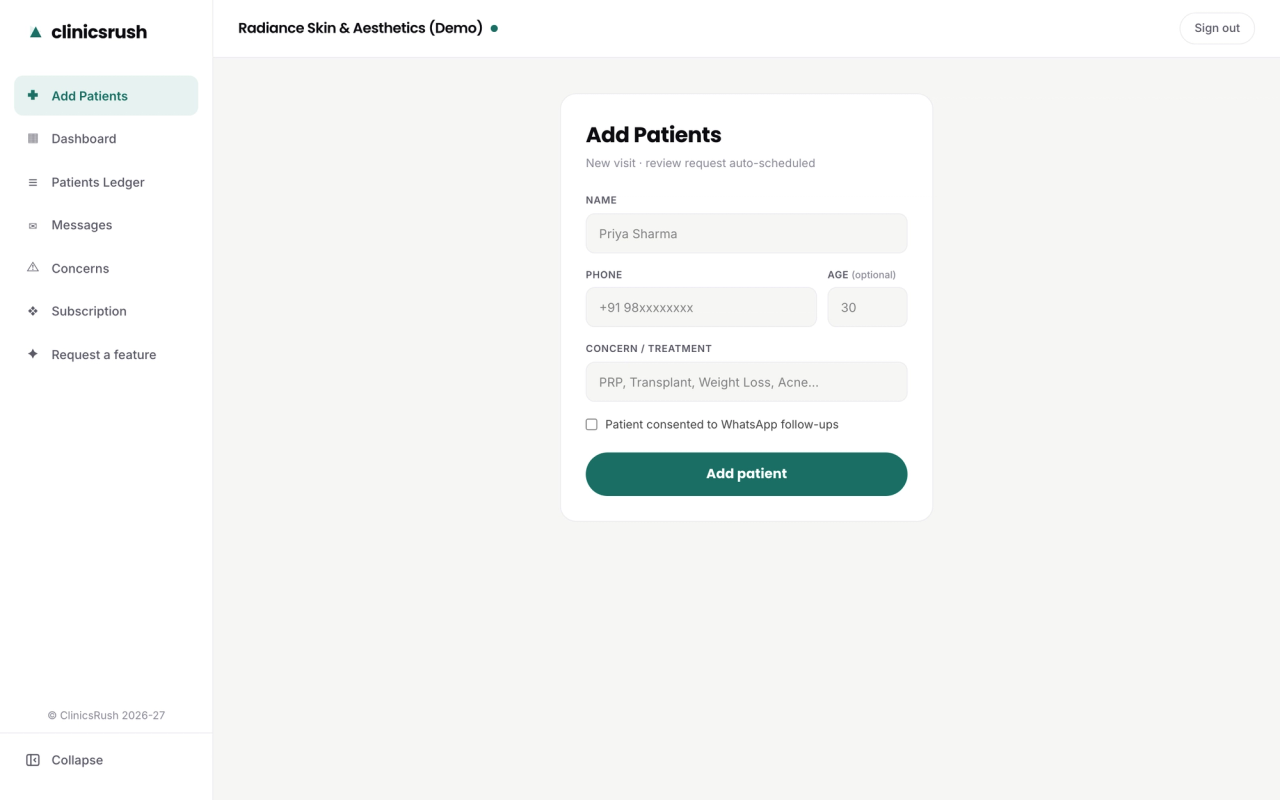
Instead of patient details living across registers, spreadsheets and separate systems, patient information, treatment details and visit history sit in one dashboard. One place to manage patient communication, without switching tools.
From there ClinicsRush handles the follow-up. Depending on how you set it up, it can check on a patient's recovery, remind them about an upcoming visit, or ask about their experience. Nobody has to remember when each message should go out.
Timing matters here, because patients respond while the visit is still fresh. A few days later, the moment has usually passed.
It Doesn't Send Every Patient Straight to Google
The platform doesn't assume every patient had the same experience. Before asking for a public review, it asks a simpler question first: were you happy with the service?
If they say yes, they go straight to your Google Business Profile, where the review takes a few clicks.
If they say no, they aren't sent to Google. They see a message saying the clinic is sorry to hear it and that someone will contact them shortly, and the doctor or the relevant team member is notified so they can follow up personally.
Sometimes it's a misunderstanding. Sometimes the patient has questions left over from the consultation. Sometimes it's the waiting time rather than the treatment. A phone call usually settles it.
What you get is a chance to hear about the problem before it becomes a public review.
It's About the Relationship, Not Just the Rating
Review automation is usually pitched as a way to get more five-star ratings. The more useful part is what happens after the appointment.
A patient who gets asked about their experience can tell that the clinic wants to know.
Happy patients get an easy way to say so publicly.
Patients with a concern get a private channel instead of going straight to a negative review.
How Does ClinicsRush Help You Get More Google Reviews?
Sending a request doesn't guarantee a review. Timing, the patient's experience, and how easy you make it all decide whether it happens.
Every Happy Patient Actually Gets Asked
Most clinics lose reviews because satisfied patients are never asked. The receptionist forgot. It was a busy day. The patient left before anyone could get to it.
When the request is part of the workflow, every eligible patient gets the same opportunity. That turns occasional reviews into steady ones.
The Ask Arrives While the Visit Is Fresh
If someone asks for feedback right after a good experience, you're far more likely to respond than if they get in touch a week later. Healthcare is no different.
Because the follow-up goes out soon after the appointment, the response rate is a different number entirely. Timing alone does most of that work.
Negative Feedback Doesn't Have to Become a Public Review
Every clinic gets unhappy patients. Waiting time, confusion about treatment or billing, or sometimes just wanting someone to listen.
With no feedback process, those patients go straight to Google.
When a patient says they weren't satisfied, ClinicsRush alerts your team instead of pointing them at your Google Business Profile, so you can reach out and try to resolve it.
Not every unhappy patient will change their mind, and that's fine. Many of them just want to be heard, and responding quickly shows the feedback wasn't ignored.
Your Team Doesn't Have to Remember Anything
Reviews shouldn't depend on whether someone sent a message before leaving for the day. Your reception team is already managing:
- Appointments.
- Billing.
- Phone calls.
- Walk-ins.
- Patient queries.
Adding manual follow-ups to that list is how the process becomes inconsistent. Automating the communication takes it off their plate entirely.
Automation Only Amplifies the Experience You Already Give
No software will produce positive reviews if patients leave your clinic unhappy.
ClinicsRush can automate the follow-up, but your patient experience is what gives someone a reason to leave five stars.
Usually it's the small things. A receptionist who greets patients properly. Telling patients when there's a delay. Explaining the next steps after treatment clearly. Checking on recovery after a procedure. Ending the visit on a good note.
Those moments decide how patients remember your clinic. A timely message afterwards just makes it easy for them to say it out loud.
Reviews are one part of a bigger picture. If you want the rest of it handled too, the Booked Out Clinic System is our done-for-you version: a paid-consultation funnel that brings in higher-value patients, the follow-up automation that gets them to show up and come back, and the local SEO around it. Built once, and yours to keep.
Automation makes sure you ask every time. Good service makes sure they say yes.